Saxon Manor

Outdoor Seating Layout

Outdoor Seating, Solved

Arrange your outdoor seating around sightlines, shade, and one clear aisle.

Guest seating outdoors comes down to three decisions: which way it faces, how guests walk in, and where they sit once the ceremony ends. Here’s how we set it.

4.9 · 1,400+ Google reviews Three venues, one estate Booking 2027 & 2028
Start With The Ceremony

The layout starts with where the ceremony faces, not where the chairs go.

Before anyone sets a chair, we walk the lawn and pick an orientation. In Brooksville, that means guests facing away from the late-afternoon sun, not into it, and a backdrop that isn’t a parking lot or a service door. Once the orientation is set, the aisle gets marked first. Everything else in an outdoor ceremony layout — rows, spacing, seating chart — follows from that one line. Skip this step and you end up rearranging chairs an hour before the ceremony, which is the fastest way to lose the calm you paid for.

For groups up to 150, a single center aisle works better than two side aisles. It gives every guest a straight sightline to the couple instead of a three-quarter view, and it photographs cleaner. Aisle width should fit two people walking arm in arm comfortably — tight enough to feel intentional, wide enough that nobody brushes a chair on the way down. We set ours at a consistent width for the full length of the aisle, not narrower at the front, which is a common mistake that makes the last few rows feel like an afterthought.

Row spacing outdoors needs more room than it does indoors. Grass isn’t flat, chair legs sink slightly, and guests in outdoor seating tend to spread out more than they do at an indoor table. We build in extra space between rows so nobody’s shifting a chair mid-ceremony, and we keep the first two rows reserved and clearly marked so immediate family isn’t hunting for a seat while everyone else is already seated.

How We Do It

Here is the order we actually follow on site.

  • Walk the site with your coordinator.

    We check sun angle for your ceremony time, wind exposure, and ground condition before a single chair comes off the truck.

  • Set the aisle and orientation first.

    The aisle line determines everything else. We mark it, then build rows around it, not the other way around.

  • Choose rows or a gentle curve.

    Straight rows suit a formal ceremony. A slight curve brings the back rows closer to the couple without shortening the aisle.

  • Reserve and label the front rows.

    Family and wedding party seats are marked ahead of time so there’s no last-minute reshuffling as guests arrive.

  • Build the rain plan alongside the outdoor plan.

    Every outdoor layout at Saxon Manor has an indoor equivalent ready to go. See how we plan a rain backup for the details.

After The Vows

Reception seating outdoors follows a different logic than ceremony rows.

Once the ceremony ends, seating shifts from rows to round tables, and the priorities change. The dance floor and head table become the new focal point, so tables get positioned with sightlines to that, not to where the aisle used to be. We leave clear walking paths between tables — wide enough for a server carrying plates and a guest in heels — and we keep tables that will hold older guests or families with kids closer to shade and closer to the restrooms, not tucked at the far edge of the lawn.

Table count and spacing depend on which venue you’re in. The Barn and Garden Room both hold up to 150* guests, which means more tables and more walking distance between them; BoHo tops out at 55, which lets us keep the whole reception tighter and more conversational. None of this changes the price you were quoted — see venue pricing and capacities for how the two scales compare. What changes is how much ground your seating plan has to cover, and we adjust the layout to the room, not the other way around.

*The Barn can accommodate up to 200 guests maximum, and a $50 per person charge will be applied at any party size over 150.

Accessibility gets built into the plan from the start, not added after complaints. That means at least one path wide enough for a wheelchair or walker from parking to ceremony to reception, no gravel-only routes, and aisle-adjacent seating held for anyone who needs it. If this matters for your guest list, read how we handle accessibility outdoors before you finalize your chart — it’s easier to plan for up front than to fix on the day.

Quick Reference

The guidelines we default to on every outdoor layout.

  • Face the ceremony away from direct afternoon sun.
  • Use one center aisle for guest counts up to 150.
  • Widen row spacing beyond indoor standards for uneven ground.
  • Reserve and label front rows for family before guests arrive.
  • Keep reception walking paths clear of table corners and cords.
  • Hold shaded, accessible tables near restrooms for guests who need them.
  • Confirm the rain-plan layout before the wedding week, not the morning of.

Saxon Manor

Buffet Ideas for an Outdoor Wedding

Food

Buffet ideas that survive an outdoor Florida reception.

A buffet outdoors has one constraint a plated dinner does not: the food is standing in the heat while people queue. Build the menu around that and it works beautifully.

4.9 · 1,400+ Google reviews Three venues, one estate Booking 2027 & 2028

The constraint

Heat, and the length of the queue.

The dishes that disappoint outdoors are the ones that need to be eaten in the first two minutes. Delicate fish, anything crisp, anything dressed in advance. They are fine indoors and they suffer on a warm terrace.

What works is food that holds. Braises, roasts, grains, anything with sauce, anything served at room temperature on purpose.

Formats that work

Five that suit an outdoor reception.

  • Carving station — a chef at the station keeps it hot and it doubles as something for guests to watch.
  • Build-your-own bowls — one base, several toppings. Handles vegetarians and picky eaters without a separate menu.
  • Southern spread — slow-cooked meats and sides that are genuinely better after standing twenty minutes.
  • Grazing table for the cocktail hour — cured meats, cheeses, breads, fruit. No heat to lose.
  • Late-night snack — the most under-rated line on any wedding menu, and the one guests talk about.

Logistics

Three things that fix a slow buffet.

  • Two lines, not one

    A double-sided table halves the queue. It is the single biggest improvement available and it costs nothing.

  • Release tables in order

    Rather than a hundred and fifty people standing up at once. Your coordinator should be doing this without being asked.

  • Put the drinks somewhere else

    A bar next to the buffet creates one long jam instead of two short ones.

Here

The kitchen is in house.

Catering, staff and the menu are inside the package rather than a separate contract, and you taste the food before you commit. That means the menu is a conversation with the people cooking it, not a negotiation with an outside caterer. See what is included.

Saxon Manor

How to Prepare for Unpredictable Weather on Your Wedding Day

Florida weather

Preparing for weather you cannot predict.

You cannot forecast a Florida afternoon eight months out. You can remove the decision from the day itself, which is the only part that actually matters.

4.9 · 1,400+ Google reviews Three venues, one estate Booking 2027 & 2028

The real risk

It is not the rain. It is the decision.

Florida rain is usually brief. What ruins a wedding is the hour before it, when somebody has to decide whether to move, nobody has the authority to say so, and a hundred and fifty guests are watching the sky.

Every useful weather plan is really a decision plan. Who calls it, by when, and what happens automatically once they do.

What to settle in advance

Three questions, answered at booking rather than on the day.

  • Who makes the call

    One named person, not a committee and not the couple. You should be getting ready, not reading radar.

  • What the cut-off time is

    A specific hour, agreed in advance. “We will see how it looks” is not a time.

  • What changes when they call it

    If the answer involves a phone call to a rental company, it is not a plan. It should be a room that is already there.

Practical

Things that genuinely help.

  • Build the schedule with half an hour of slack. Weather plans eat time.
  • Tell the photographer the indoor plan exists so they have already scouted it.
  • Put ceremony chairs somewhere they can be dried, not somewhere they will sit in it.
  • Season matters more than the date. The cooler dry months behave very differently from an August afternoon.

Here

Three rooms on one property.

The plan is that your wedding moves indoors with the same team, on the same property, at the same price. There is no tent invoice and no morning phone call, because there is nothing to hire. The full rain plan is here, and how to build one anywhere else is here.

Saxon Manor

Age-Appropriate Wedding Activities

Planning For All Ages

Guests from toddlers to grandparents all get something to do at your reception.

Age-appropriate activities aren’t an upgrade at Saxon Manor — they’re part of how every wedding’s timeline gets planned, matched to your actual guest list and the room you book.

4.9 · 1,400+ Google reviews Three venues, one estate Booking 2027 & 2028

Direct Answer First

Every generation gets something to do, not just something to watch.

Yes — a wedding at Saxon Manor can be built around activities that fit every age in the room, from toddlers to great-grandparents, without splitting the celebration into separate parties happening under one roof. The in-house DJ included in every package reads the room and adjusts: interactive songs and easy games during cocktail hour, when kids and older relatives are still seated, then a longer open dance stretch later for the group that wants to stay on the floor. The officiant, photographer, and coordination staff who come with your package all work off the same day-of timeline, so the shift from family-friendly to full dance floor happens on cue instead of in an awkward lull.

Cocktail hour is where age-appropriate activities do the most work, because that’s the stretch when kids get restless and older relatives want somewhere to sit and talk. Lawn games set up on the grounds — cornhole, giant Jenga, a ring toss — give children and younger guests something physical to do while photos happen elsewhere. A small table with coloring sheets and simple puzzles keeps younger kids occupied at their seats without pulling a parent away from the group. None of this requires hired childcare or a separate room; it just requires knowing which of your guests are six and which are sixty, and planning the hour around both.

Older relatives need less activity and more comfort, and that shapes the plan just as much as anything built for kids. Seating close to the ceremony and reception space, indoor climate control in the Barn and Garden Room, and a cocktail-hour area that isn’t directly beside the speakers all matter more to a grandparent than a photo booth does. Your coordinator sets the sound check and the early music volume around the fact that the room holds people who’ve been dancing at weddings since before the DJ was born, and people who’d rather not shout to be heard over dinner. Getting that balance right is a scheduling decision, made in planning meetings, not improvised on the day.

The size of your guest list changes what an age-appropriate activity actually looks like. A BoHo wedding, capped at 55 guests, tends to be close family and a handful of friends — the activities that work best are ones built around everyone already knowing everyone, like a shared toast, rather than a rented lawn game. A Barn or Garden Room wedding, with room for up to 150*, has enough distance between groups to run a kids’ corner, a lawn game area, and a full dance floor at once without any of them crowding the others. Neither approach is more correct — it’s a question of which one fits the wedding you’re actually having.

*The Barn can accommodate up to 200 guests maximum, and a $50 per person charge will be applied at any party size over 150.

By Age Group

Different ages want different things from the same three hours.

Young children rarely find the ceremony itself boring — it’s the gap afterward, while photos happen and the room turns over for dinner, where they need something to do. A coloring table at the kids’ seats, a simple scavenger hunt around the grounds, or lawn games set up outdoors all solve this without hiring a babysitter or building a separate program into your package. Saxon Manor doesn’t provide childcare staff, and saying so plainly matters more than pretending otherwise: if you’re expecting a number of young kids, plan for a parent or family member to watch the activity area, and put it on the timeline with your coordinator rather than assuming it sorts itself out.

Teenagers at a wedding usually want two things: to not be treated like small children, and to not sit through an adult cocktail hour with nothing for them. A photo booth or a simple guest-book alternative — a card to sign, a Polaroid station — gives them something to do without singling them out. Music matters more here than almost anywhere else on this page; a DJ who can read a room full of thirteen-to-nineteen-year-olds and adjust the set without losing the sixty-year-olds at the next table is doing real work, and it’s part of what you’re paying for when the DJ is included in your package instead of booked separately.

For guests in their twenties and thirties — often the largest single group at most weddings — the activity is the dance floor, and the job is opening it at the right time and keeping it open long enough. This is a scheduling question more than a decoration one: cocktail hour and dinner need to move at a pace that reaches the open dance floor while the room still has energy, not two hours later once half the group has quietly started checking rides home. Your coordinator sets that pacing with the caterer and the DJ during planning, so the night builds instead of stalling in the middle.

Grandparents and older relatives are often the guests most likely to sit through the whole event front to back, and the activities that serve them best are the quiet kind: a seat with a clear sightline, a conversation area away from the speakers, a cocktail hour that doesn’t require standing the entire time. The Bridal Suites’ three rooms give the wedding party somewhere private to gather before the ceremony, and that same instinct — a quiet space that isn’t the center of the noise — is worth building into the reception layout for guests who came to watch and visit, not dance until midnight.

Room By Room

The room you book decides how much activity space you actually have.

The Barn holds up to 150* guests and gives you the most physical space to spread activities out — a lawn game area near the entrance, a kids’ table set apart from the head table, a lounge corner for older relatives who’d rather sit somewhere other than their assigned seat. Because the room is large enough to hold all of this without anyone feeling crowded, it tends to suit weddings with a wide age range: young families, college friends, and grandparents in the same room, each with a corner that fits them. Full pricing at that capacity is on the pricing page, so you can plan the guest list and the layout together.

The Garden Room shares the Barn’s 150*-guest capacity but reads differently — more open sightlines, a layout that tends to put activity areas in view of the main tables rather than off in a separate corner. That works well if your guest list skews toward people who want to watch what’s happening even when they’re not part of it: older relatives who like being near the action without being asked to stand and participate, kids who stay closer when they can still see a parent. Which room fits your list better is worth bringing to a tour, since photos alone don’t show you how a room handles a crowd.

BoHo, capped at 55 guests, is built for a different kind of gathering entirely — small enough that formal activities often aren’t the point, and the day runs more like a close family gathering with a ceremony in the middle. If you’re planning a BoHo wedding with kids or older relatives in the mix, the smaller footprint usually means less need for a dedicated kids’ corner or a separate quiet area, since everyone is close enough to move between groups without either being far from the other. It’s also the venue behind the BoHo rehearsal dinner, shower, and brunch packages, useful if your age range spans multiple events across the wedding weekend.

Whichever room you book, the activities that actually work on the day are the ones planned with your coordinator in advance, not the ones added the week before because a blog post suggested them. Saxon Manor’s coordination team builds the age-appropriate parts of your timeline — when the lawn games come out, when the kids’ table gets bussed, when the DJ shifts from dinner music to the first dance — into the same planning meetings that cover catering and photography. That’s the difference between a wedding that has activities and one where they happen at the right time, for the right group, without anyone standing around wondering what’s next.

What’s Included, What Isn’t

Know what’s part of the package before you plan around it.

The activities described on this page work because of what’s already included in a Saxon Manor package, not because of add-ons you have to source separately. The DJ, the officiant, the photographer, and the coordination staff who plan the timeline around your guest list are all part of the same all-inclusive price — see the full list on what’s included — which means the age-appropriate planning described here isn’t a special request. It’s part of the normal planning conversation every couple has, at the price they were quoted before they signed anything.

Saxon Manor does not provide childcare staff, supervised kids’ activities run by outside vendors, or age-verification at a cash bar — those are things you plan around with family or hire separately if your guest list calls for them. Being direct about that up front beats discovering it the week of the wedding: if you know you’ll have a dozen kids under ten, decide now who’s watching the activity table, and tell your coordinator so it’s on the timeline. The same goes for teenagers who might want soft drinks and mocktails instead of standing at the edge of an adult bar with nothing to hold.

This is the same principle behind everything Saxon Manor quotes: the price you’re quoted is the wedding you get, and that includes the plan for how different ages move through the day. A quote that doesn’t account for your actual guest list — the number of kids, the number who’ll need a quieter corner, the number who’ll be on the dance floor until the lights come up — isn’t a complete quote, it’s a placeholder. Ask about age-appropriate activities on your tour, and expect a specific answer about your room and your guest list, not a general one about weddings in general.

If your guest list includes a wide age range, the most useful next step is a tour where you walk the room with your coordinator and talk through where the kids’ table goes, where the quiet seating goes, and where the dance floor opens up. That conversation is more useful before you book than after, because it’s easier to choose the room that fits your guest list than to force a guest list to fit a room. For more on how Saxon Manor handles families with kids specifically, see child-friendly options, which covers details this page doesn’t.

Quick Reference

Here’s a fast way to match activities to your guest list.

  • Kids under 10: a coloring table, lawn games, and a seat near — but not in — the dance floor.
  • Teens: a photo booth or Polaroid guest book, mocktails, and a DJ who doesn’t ignore them.
  • Twenties and thirties: an open dance floor timed to start while the room still has energy.
  • Grandparents and older relatives: sightline seating, a quiet cocktail-hour corner, and indoor climate control.
  • Large, wide-age-range guest lists: the Barn or Garden Room, both up to 150* guests.
  • Small, close-knit guest lists: BoHo, capped at 55, built for a close family gathering.

Keep Reading

Related pages worth a look before you book.

Saxon Manor

Choosing a Barn Wedding Theme

Barn Decor Strategy

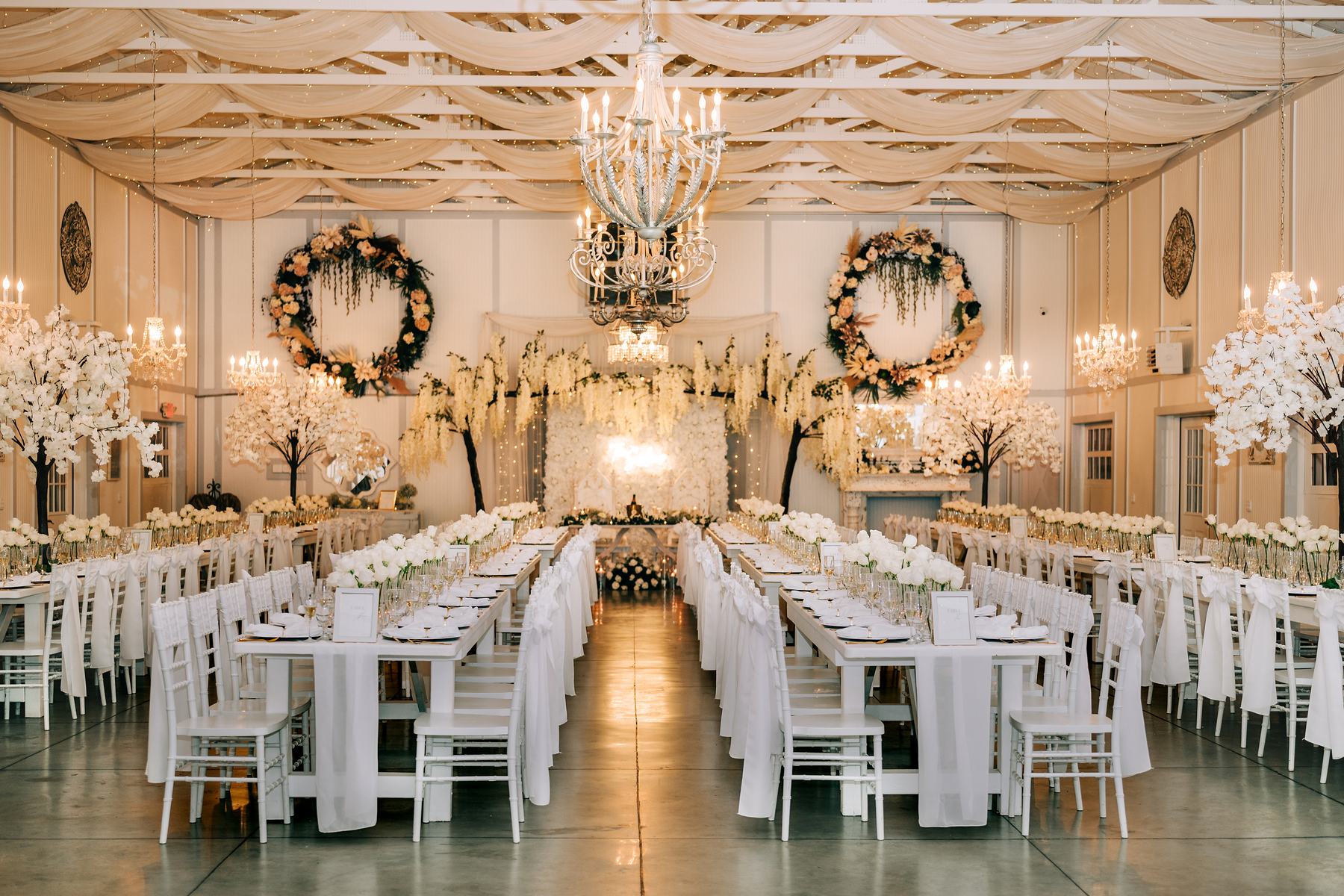
A barn wedding theme works when it fits the wood, the light, and the room you actually booked.

The Barn already has a look before you add a single flower. The right theme works with that look instead of covering it up — here’s how to find it.

4.9 · 1,400+ Google reviews Three venues, one estate Booking 2027 & 2028

Start Here

Start with what the barn already gives you.

The Barn already has a personality before you add a single flower. Exposed wood beams, high ceilings, and warm ambient light set a tone that’s rustic without being rough around the edges. A theme that fits this room works with those materials instead of covering them up. Sleek, all-white minimalism fights the wood grain. Heavy industrial metal fights the warmth. The barn reads best when the palette, the linens, and the florals pick up what’s already there — natural fibers, muted golds, deep greens, warm neutrals. Before you pin a single inspiration board, walk the space and notice what it’s already telling you. That’s the starting point, not a mood board pulled from somewhere else.

Scale matters as much as style. The Barn holds up to 150* guests, and a theme has to hold up at that size without looking sparse at 60 or crowded at 150. Oversized installations look intentional with a full room; the same pieces look thin with a smaller guest list. Decide your guest count early and build the theme around it — table shapes, aisle length, and where guests’ eyes land when they walk in. A theme that photographs well in a single Pinterest square doesn’t always fill a barn the size of this one. Ask what the room needs at your actual number, not what looks good in a close-up shot.

*The Barn can accommodate up to 200 guests maximum, and a $50 per person charge will be applied at any party size over 150.

Every theme decision eventually runs into a budget line, and that’s fine — it’s the honest part of planning. The Barn’s all-inclusive package runs $15,000 to $21,000 depending on your date and guest count, and that figure already covers the ceremony, reception, design, and staffing detailed on what’s included. A theme that leans on rented arbors, custom dance floors, or a full lighting rig from an outside vendor pushes past that range fast. A theme that works with the barn’s existing structure — its beams, its natural light, its own bones — keeps you inside the price you were quoted. Check the full breakdown on pricing before you commit to anything elaborate.

The Process

Follow this order and the theme picks itself.

  • Walk the barn without a plan

    Before you search for inspiration photos, stand in the Barn and look at what’s already there — the beams, the light through the windows, the natural wood tone. A theme that ignores those materials fights the room all day. A theme that borrows from them looks intentional in every photo, not just the staged ones.

  • Pick one season and one color anchor

    Choose the season you’re marrying in and one anchor color, not five. Fall calls for deeper golds and rust; spring calls for softer greens. Everything else — linens, menu cards, the cake design — should take direction from that single choice instead of competing with it.

  • Set your guest count before you set your decor

    The Barn holds up to 150* guests. A theme built for 150 people looks sparse at 60, and a theme built for an intimate gathering can feel crowded at capacity. Decide your number first, then scale the theme to match it.

  • Loop in the florist before the linens

    Saxon Manor’s in-house florist, Enchanted Design & Floral, works inside the barn regularly and knows what holds up against the wood tones and what gets lost in them. Bring your theme to them early, before you’ve locked in rentals elsewhere.

  • Confirm it in the room, not on paper

    Book a walkthrough and bring your color swatches, your linen samples, whatever you’re considering. A theme that looks right in a binder can look wrong under the barn’s actual light. See it in the space before you finalize anything.

What Holds Up

Some themes fit a barn better than others.

  • Rustic elegant — exposed wood left visible, gold or brass accents, greenery over heavy floral
  • Vintage farmhouse — mismatched wood tones, market lights, simple unfussy linens
  • Wildflower and boho crossover — loose arrangements, warm neutral palette, relaxed table styling
  • Autumn harvest — deep jewel tones, dried florals, metal and wood paired deliberately
  • Classic black-tie-in-a-barn — works, but needs restraint so it contrasts the wood instead of hiding it
  • What doesn’t fit — all-white minimalism, chrome and glass, cold palettes that argue with warm wood

The Details

Lighting, florals, and knowing when to choose a different room.

Lighting does more work in a barn than almost any other single decision. The Barn’s own light — high windows, open ceiling — already does half the job during the day. String lights, lanterns, or candles pick up where daylight leaves off for an evening reception, and they read as part of the barn rather than an add-on. Linens work the same way. Heavy, structured linens look formal against rough wood; loose, natural-fiber linens look like they belong. The theme that fits isn’t the one with the most elements — it’s the one where lighting, linens, and the room agree with each other instead of arguing.

Florals carry more of the theme in a barn than they do in a room with less texture already in it. Saxon Manor’s in-house florist, Enchanted Design & Floral, designs specifically for these spaces, which means the arrangements are built to hold their own against exposed wood rather than get lost in it. If you’re customizing beyond what’s standard — arches, aisle treatments, a specific color you’re not seeing elsewhere — bring it up early. There’s more room to personalize a barn wedding than people expect, and the details on how far that goes live on this page.

Not every theme belongs in a barn, and that’s worth saying plainly. A theme built entirely around soft pastels, manicured greenery, and an open-air backdrop usually fits better in the Garden Room. A theme built for something smaller and more relaxed, without the scale of a 150-guest room, often fits BoHo instead. Choosing the right theme starts with choosing the right room, and forcing one into the other usually shows up in the photos. If you’re not sure which room your theme actually fits, the comparison on this page is a faster answer than guessing.

Saxon Manor

Venue Size & Planning

Room Size & Planning

Your guest count decides the room, the price, and how your wedding day moves.

The size of the room you book sets your guest list, your budget range, and your timeline before a single flower or menu is chosen. Here’s how that plays out at Saxon Manor.

4.9 · 1,400+ Google reviews Three venues, one estate Booking 2027 & 2028

Where Planning Starts

Guest count decides everything else you plan.

The size of your venue is the first decision that shapes every decision after it. Before you choose flowers or a menu, you’re choosing a room, and that room sets your guest count, your budget range, and how the day physically moves from ceremony to reception. At Saxon Manor Weddings, the question isn’t which room looks best in photos — it’s which room fits the wedding you’re actually planning. We operate three spaces: the Barn, the Garden Room, and BoHo. Each has a fixed capacity and a fixed price band, so the size you pick on day one becomes the frame everything else gets built inside. See the full room-by-room pricing before you tour, so you walk in already knowing what fits.

Capacity at Saxon Manor is a real number, not a marketing estimate. The Barn and the Garden Room each hold up to 150* guests. BoHo holds up to 55. That number is fixed by fire code, floor plan, and how the room is set for dinner and dancing, and it doesn’t flex because a couple wants to add twenty more names in March. Knowing your ceiling early changes how you build a guest list — you invite to the room you booked, not the other way around. It also changes your seating plan, your ceremony layout inside the room, and how much open floor you have for a dance floor once dinner tables are cleared or moved.

*The Barn can accommodate up to 200 guests maximum, and a $50 per person charge will be applied at any party size over 150.

Size also decides your timeline. A room built for 150 guests needs more time to turn from ceremony seating into a reception layout than a room built for 55. Chairs move, tables get set, linens go down, and the bar and event staff need a real window to do it without guests standing around watching folding tables go up. In the Barn or Garden Room, that turn is a bigger job with more moving pieces. In BoHo, the smaller footprint means a faster reset and a tighter, more contained flow from vows to first dance. Your day-of schedule should reflect which room you’re in, not a generic timeline pulled from a wedding blog written for no venue in particular.

The wrong size room works against you even if everything else about the day is exactly right. Put 60 guests in a room built for 150 and the space swallows them — the dance floor looks empty, conversations echo, and photos show a lot of unused room around every table. Put 150 guests into a room built for 55 and you get a different problem: tight aisles, a cramped bar line, and a dance floor nobody can actually use. We size the room to the wedding, not the wedding to the room, which is why we ask about your guest count before we ever walk you through a space. It’s a smaller conversation than florals or menus, but it’s the one that decides whether the room works for you or against you.

Budget & Size

Bigger rooms cost more because more goes into them.

Because every Saxon Manor package is all-inclusive, size and budget move together in a way you can actually predict. The Barn and the Garden Room, each seating up to 150* guests, run $15,000 to $21,000 for the full package. BoHo, capped at 55 guests, runs $9,500 to $12,500. That range isn’t a starting price with fees stacked on after — it’s the ceremony, the reception, the food, the bar, the coordination, and everything else bundled into one number tied to your room and your guest count. The full breakdown lives on our pricing page, but the short version is this: the price you’re quoted is the wedding you get, not a floor that grows once you sign.

The spread inside each range comes from choices you make within the room, not from the size of the room changing on you. A Tuesday in February inside the Garden Room and a Saturday in October inside the same room can land at different points in that $15,000 to $21,000 window, but the guest cap stays at 150 either way. Size sets the outer boundary of what’s possible; the date, the season, and your menu choices move you within it. That’s a very different conversation from venues that quote a base rate and then price the room, the chairs, and the staff separately once you’re already committed to the date.

BoHo carries its own advantage for smaller guest lists beyond the lower package price. Because it’s built for up to 55 guests, it also works for the events around the wedding — a rehearsal dinner, a bridal shower, or a post-wedding brunch, each priced separately at $2,000 to $3,000. Couples who don’t need 150 seats often save real money by choosing the room built for their actual guest list instead of booking a bigger room “just in case.” A guest list of 50 in a room built for 55 feels intentional. The same 50 guests in a room built for 150 feels like a smaller event borrowing a bigger space, and you pay the bigger-space price for it.

If you’re deciding between a smaller room at a lower price and a larger room “for growth,” start with your actual list, not your hoped-for one. Add the names you’re certain of, then the likely additions, and compare that total honestly against the two capacities on the table: 55 or 150. There’s no room at Saxon Manor sized for 80 or 100 — you’re choosing one side of that gap or the other, and the price band follows whichever side you land on. Understanding what all-inclusive actually covers makes that comparison easier, because you’re comparing two complete weddings, not two base rates with different add-ons waiting behind them.

Logistics That Follow Size

Room size shapes staffing, flow, and vendor timing.

Every vendor built into your package scales differently depending on room size, and that’s worth understanding before you book. Our in-house chefs plan kitchen output and service timing around your actual guest count, whether that’s 55 or 150 — a buffet for a full Barn moves through the kitchen differently than the same menu for a BoHo-sized crowd. Bar and event staff numbers are set to the room, not to a flat formula, so a larger reception gets more hands behind the bar and more servers on the floor. None of this is something you manage yourself; it’s built into the package at whichever size you book, which is part of what “all-inclusive” is supposed to mean.

Photography and DJ coverage change shape with the room too. A 150-guest reception in the Barn or Garden Room gives a photographer more people to find, more candid moments spread across a bigger floor, and more group shots to organize before the light changes. BoHo’s smaller guest list means fewer formal group photos and more time spent on the couple and close family, which is a different kind of coverage, not a lesser one. The DJ builds the same difference into the night — a bigger room needs sound that fills more air without overwhelming the tables closest to the speakers, while BoHo’s tighter footprint calls for a more contained setup built for an intimate crowd rather than a packed dance floor.

Florals scale with the room in the same way. Our on-site sister company, Enchanted Design & Floral, builds arrangements around the actual dimensions of the space — a Barn ceremony arch and reception tablescapes for 150 guests take more material and more setup time than the same elements built for BoHo’s smaller footprint. That’s not a reason to expect the same total investment in flowers regardless of room; it’s the reason floral planning is tied to your headcount from the first conversation, not decided in isolation from the room you’ve booked. See everything bundled into the package so you know exactly what scales with your guest count and what stays constant.

Design and coordination work the same way behind the scenes. A coordinator laying out 150 guests across the Barn is solving a different puzzle than one arranging 55 guests in BoHo — table placement, walking paths, gift and card tables, and where the cake sits all depend on how much floor you actually have. That planning happens before your wedding week, but it starts with the number you gave us when you booked, which is why an accurate guest count matters more than almost anything else you’ll tell us early on. Get the number right, and the rest of the room-specific planning follows without surprises later.

Choosing The Right Size

Match your guest list to the room before you fall for the space.

Decide on your guest list before you fall in love with a room. It’s easy to tour the Barn, picture the exposed beams full of your favorite 150 people, and commit to a size before you’ve actually counted who’s coming. Start the other direction: build a real list, round up slightly for plus-ones and late additions, and let that number point you to the room. If you land near 150, the Barn and the Garden Room are both built for that scale, and the choice between them comes down to look and feel rather than capacity. If you land closer to 55 or under, BoHo is built for that day specifically, not as a scaled-down version of the bigger rooms.

Location plays into this decision too, especially for guests traveling in. Saxon Manor sits about 45 minutes from Tampa and about 90 minutes from Orlando, which puts both major airports within reach for out-of-town guests regardless of which room you book. A larger guest list often means more of those traveling guests, which makes the drive time and the room’s capacity two parts of the same planning question rather than separate ones. Knowing the distance your guests are covering helps you judge whether 150 is a realistic number for your circle or whether a tighter, more intentional guest list — and the smaller room that goes with it — fits your actual wedding better.

We’re currently booking weddings for 2027 and 2028, and room availability moves on its own schedule depending on size and season — the Barn and Garden Room, both capped at 150*, tend to draw interest from larger wedding parties looking at Saturdays, while BoHo gets booked by couples who already know they want something smaller and more contained. If you have a size in mind, it helps to say so early, because it narrows the conversation to the room that actually fits instead of touring all three and deciding later. A guest count decided early saves a second round of planning once you realize the room you toured doesn’t hold the list you actually have.

The clearest way to settle this is to walk all three rooms with your number already in hand. Bring your guest list, not just a rough guess, and ask how it would actually sit in the Barn, the Garden Room, and BoHo — where the tables go, where the dance floor lands, how the ceremony faces the room. Comparing the Barn and the Garden Room directly helps once you know you need the larger capacity; if BoHo’s 55-guest cap fits your list, that comparison is a different one entirely. Either way, the room should be sized to the wedding you’re actually having, not the other way around.

Related Reading

Keep planning with these related pages.

Saxon Manor

Garden Room Ceremony Timing

Ceremony Planning

Late afternoon light is when the Garden Room looks its best.

In a room this light-filled, timing changes everything. Here’s the exact window that gets you the best light, the smoothest schedule, and the best photos.

4.9 · 1,400+ Google reviews Three venues, one estate Booking 2027 & 2028

The Direct Answer

Late afternoon gives the Garden Room its best light.

The Garden Room is light-filled, so the sun is doing half the work before your florist ever shows up. A ceremony start between 4:00 and 5:00 in the afternoon puts the light at an angle instead of straight overhead, which is the difference between soft, flattering photos and everyone squinting through the vows. This window also lines up naturally with cocktail hour and dinner service, so your day moves forward instead of stalling out with a long gap between ceremony and reception. If you’re set on an earlier start, we can talk through it, but late afternoon is where the room looks its best without any extra lighting tricks.

Brooksville sits well south, and the midday sun in June is strong enough that guests feel it, even indoors with the air conditioning running. A noon or 1:00 ceremony works fine in January; in June, a later start is kinder to your guests. Pushing the start later in the day sidesteps that problem entirely. It also means your florist’s arrangements aren’t wilting under direct sun for two hours before you even walk down the aisle. None of this means the Garden Room can’t handle a daytime wedding — it just means the room rewards a later start more than it punishes an earlier one.

The exact best time shifts with the calendar, since Florida’s sunset moves by more than an hour between December and June. A 4:30 start in winter and a 5:30 start in summer land you in roughly the same light, so don’t lock in a time just because it worked for a wedding you saw in a photo online. Your coordinator will pull the actual sunset for your date and build backward from there — ceremony, photos, cocktail hour, reception — so the golden hour you’re picturing actually lands during portraits instead of during dinner. That planning is part of the package, not an add-on you have to chase down yourself.

Why It Matters

The ceremony time sets the pace for everything after it.

Once the ceremony ends, the day doesn’t pause — cocktail hour starts while our staff flips the Garden Room for dinner, and that turnaround only works if the timeline was built around a specific ceremony time from the start. A 4:30 ceremony means cocktail hour runs while the light is still good for outdoor portraits, dinner service starts as the sky turns, and the dance floor opens after dark, which is when most guests want it anyway. Move the ceremony two hours earlier and you either stretch cocktail hour uncomfortably long or push dinner into the middle of your reception. The time you pick for “I do” is really a decision about your whole evening.

Photography is the other piece that hinges on ceremony timing. Shooting the ceremony itself in flattering, angled light is one win; getting couple and family portraits done in the last hour of daylight is another, and you only get one shot at that golden hour per wedding. A late-afternoon Garden Room ceremony leaves that window open right after the recessional, while guests are at cocktail hour and you’re free to step outside for photos without anyone waiting on you. Start too early and that golden hour arrives in the middle of dinner, which means either interrupting the meal or skipping the light you paid a photographer to capture.

None of this is a fixed rule you have to follow. Some couples want a shorter guest list and a relaxed morning ceremony with brunch after — the BoHo space handles that well for up to 55 guests, and we can build a package around it. Others want the classic late-afternoon-into-evening arc the Garden Room is built for. What matters is deciding early, because the ceremony time drives catering schedules, bar service, DJ set times, and how long your photographer is booked for. That’s exactly why timeline planning is baked into the package instead of left for you to figure out with three separate vendors.

How We Plan It

Your coordinator builds the timeline around your actual date.

You don’t have to guess at any of this on your own. The coordination that comes with your package covers building the day’s schedule around your specific wedding date, which matters because sunset in Brooksville in December looks nothing like sunset in July. That conversation happens well before the wedding, not the week of, so your ceremony time, cocktail hour, dinner service, and reception all line up with the light and with each other. If you want the specifics on what’s included in that coordination, that’s covered on what’s included rather than here.

Weather is the other variable worth planning around rather than hoping against. Florida afternoons can turn on short notice, especially in summer, and a ceremony time chosen without a rain plan is a ceremony time you might have to abandon last minute. We build a backup into the schedule regardless of what time you pick, so an afternoon storm changes where you stand, not whether the wedding happens on schedule. If you want to see how that backup plan actually works room to room, that’s laid out on its own rain plan page rather than folded into a timing discussion.

If you’re comparing the Garden Room against the Barn or BoHo for timing reasons, capacity and cost matter more than time of day — all three rooms can run an afternoon-into-evening schedule the same way. What changes is how much natural light each space lets in and how many guests it holds, both of which affect how early or late your ceremony can comfortably start. That comparison, including guest counts and pricing for each room, lives on the pricing page rather than here, since this page is about getting the Garden Room’s timing right, not choosing between spaces.

Quick Reference

Here’s the short version if you’re deciding right now.

  • 4:00–5:00 PM start for classic late-afternoon light
  • Avoid a straight noon start in summer — the midday sun is at its strongest
  • Sunset shifts over an hour between December and June, so timing depends on your date
  • Golden hour portraits happen right after the ceremony, during cocktail hour
  • Morning or brunch ceremonies work better in the BoHo space for smaller guest counts

Reputation

Couples rate their day here consistently.

  • 4.9 on Google 1,400+ reviews from real couples.
  • Family owned Weddings are the only business.
  • The Bridal Suites Three furnished rooms to get ready in.
  • Florals available Not included. Enchanted Design & Floral, our on-site sister company, books them separately.
  • One contract One deposit for the whole package.
  • Payment plans Available. Ask on your tour.

Saxon Manor

DIY Barn Decorating Tips

Barn Decor, Done Right

Your DIY touches can shape the Barn without fighting its architecture.

The barn already has bones worth keeping. The right DIY decorations add your voice to the space instead of covering it up.

4.9 · 1,400+ Google reviews Three venues, one estate Booking 2027 & 2028

Start With What’s Already There

The Barn already does most of the work for you.

The Barn holds up to 150* guests and comes with exposed wood, high ceilings, and a footprint built for a wedding, not a blank warehouse you have to fill from scratch. That changes how you should think about DIY decor. You’re not building a room. You’re accenting one. The instinct to cover every surface is understandable, but it usually fights the space instead of finishing it. Walk the barn before you buy a single item. Notice where the light falls, where guests will naturally look, and where the structure already does the talking. Your decorations should answer those spots, not compete with them.

*The Barn can accommodate up to 200 guests maximum, and a $50 per person charge will be applied at any party size over 150.

This is also where the package earn their keep. Design and coordination are already part of what you’re paying for, so your DIY pieces are additions to a plan that’s already sound, not a rescue mission for an empty room. That’s worth knowing before you spend a weekend gluing mason jars. Bring the personal items — the family heirlooms, the handwritten signs, the pieces that mean something to you two specifically. Let the venue and its included design work carry the rest. See what’s included for the full list of what you’re not building from zero.

Scale matters more than volume. A barn built for 150 guests can swallow a handful of small centerpieces and look under-decorated, or it can be overwhelmed by too many competing elements clustered near the entrance. Think in terms of sightlines: what a guest sees walking in, what they see from their seat, what shows up in photos taken from the back of the room. Three or four well-placed DIY moments read as intentional. Twenty scattered ones read as clutter, no matter how much time went into each one.

A Simple Sequence

Layer your DIY decor from the ceiling down to the tables.

  • Start high.

    String lighting, greenery swags, or draped fabric across the beams sets the tone before anyone looks anywhere else. Because the barn’s ceiling is already a feature, this is the highest-return DIY move you can make — it changes the feel of the whole room with a handful of installations.

  • Mark the ceremony space distinctly.

    An arch, a cluster of lanterns, or a run of aisle markers tells guests where to look and separates ceremony from reception visually, even when both happen in the same barn. Keep it removable or repositionable if your day includes a flip.

  • Dress the tables last, not first.

    Runners, place cards, and small centerpieces are the easiest DIY category and the one people over-invest in. Pick one strong element per table — a runner or a centerpiece, not both competing — and let the in-house florals fill in the rest.

  • Handle the entrance separately.

    A welcome sign or seating chart is often the first thing photographed and the last thing planned. Give it its own five minutes of design thinking instead of an afterthought pulled together the morning of.

Know The Line

Some DIY decorations belong in a barn, and some don’t.

  • Bring battery-operated candles and lanterns — open flame near exposed wood is a fire-safety problem, not a style choice.
  • Bring fabric bunting, garlands, and lightweight signage — they hang easily from existing barn structure without hardware.
  • Skip loose confetti, glitter, and rice — barns are harder to fully clean between events than open venues.
  • Skip anything that requires nails, screws, or adhesive directly on the beams — ask the coordination team about approved mounting points instead.
  • Bring personal, sentimental pieces — photos, family items, hand-lettered signs — these are what make a barn feel like your wedding and not a rental hall.
  • Skip heavy floral arrangements you’re building yourself — that’s what the in-house florist is for, and it’s one less thing on your plate the week of.

Where Your Florist Picks Up

Your florist can finish what your DIY pieces start.

Saxon Manor’s in-house florist, Enchanted Design & Floral, is an on-site sister company, not an outside vendor you have to coordinate separately. That matters for DIY planning because it means your handmade pieces and the professional floral work are designed together instead of showing up on the day and hoping they match. Bring your ideas to the design conversation early — a color, a texture, a family piece you want incorporated — and the floral work builds around it rather than around a generic package. This is the difference between DIY decorations that look bolted on and ones that look like they were always part of the plan.

A good rule: let DIY carry the personal and sentimental layer, and let the florist carry anything that needs to look consistently full and fresh for six or more hours. Handmade centerpieces wilt, sag, or shift by hour three of a reception. Professionally designed arrangements don’t. Splitting the work this way also keeps your wedding week manageable — you’re not assembling a hundred small pieces under time pressure, you’re placing a dozen meaningful ones into a room that’s already been designed around them.

If you’re not sure where the line falls for your specific vision, ask before you buy materials. The coordination team has seen what holds up in the Barn across a full event and what doesn’t, and that’s a faster answer than guessing. For more on where the boundaries sit for barn decor specifically, see what you can customize in a barn wedding venue.

Why Couples Trust This

Real ratings from real weddings, not marketing copy.

  • 4.9 on Google 1,400+ reviews from real couples.
  • Family owned Weddings are the only business.
  • The Bridal Suites Three furnished rooms to get ready in.
  • Florals available Not included. Enchanted Design & Floral, our on-site sister company, books them separately.
  • One contract One deposit for the whole package.
  • Payment plans Available. Ask on your tour.

Saxon Manor

Outdoor Wedding Florists

Outdoor Florals, Answered

Saxon Manor's in-house florist handles outdoor weddings built for Brooksville's heat, humidity, and open-air spaces.

Enchanted Design & Floral, our sister florist, builds arrangements for the Garden Room lawn, the Barn courtyard, and BoHo grounds — spaces they already know inside and out.

4.9 · 1,400+ Google reviews Three venues, one estate Booking 2027 & 2028

The Direct Answer

The best florist for an outdoor wedding here is already on our list.

Ask this question at most Brooksville venues and you’ll get a list of names to call. Ask it here and the answer is simpler: Enchanted Design & Floral, the florist Saxon Manor works with on nearly every outdoor wedding on this property. It’s an on-site sister company, not a vendor we found in a directory, which means the people arranging your centerpieces have walked the Garden Room lawn and the BoHo grounds more times than any outside florist ever will. They know which corner of the courtyard gets afternoon sun in June, where the wind cuts across the field at sunset, and how long a peony arrangement actually holds up outdoors in Hernando County in August.

That doesn’t mean an outside florist is off-limits. Plenty of couples bring in someone they’ve used before, or a florist who specializes in a look our in-house team doesn’t typically do. That’s your call to make. What matters is asking any florist, in-house or not, the same questions you’d ask about a caterer: have they set up on this specific lawn before, do they know where the power runs, and have they built for our humidity instead of a cooler, climate-controlled ballroom somewhere else. A florist who’s only ever worked indoors will make promises an outdoor Brooksville wedding can’t keep.

Because flowers here aren’t a separate stop on your planning list, they’re one more thing our coordination team schedules around your ceremony time, your chef’s timeline, and your DJ’s setup. That’s the advantage of working with a florist already inside the same company that runs the venue: nobody’s guessing when the truck arrives or where the arch goes. If you want a florist with no connection to Saxon Manor, that’s fine too. Just build in more of your own coordination time, because nobody outside this property is going to know the Barn’s back doors the way our own florist does.

Outdoor Florida Weddings

Central Florida heat and humidity decide which flowers actually work outdoors.

Central Florida sun does not treat cut flowers gently, and a wedding at 2 p.m. in July asks more of a bouquet than one at 6 p.m. in October. Hydrangeas droop within an hour outdoors in real heat. Soft, tight-petaled blooms go the same way. What holds up: tropical varieties, tighter-headed flowers, greenery-heavy arrangements, and anything a florist has actually tested outdoors in this climate rather than photographed indoors somewhere with air conditioning. This is the argument for hiring someone who works Brooksville regularly over someone who mostly works cooler markets. Humidity and heat are not a minor variable here. They’re the first thing a florist should ask you about.

Ceremony time changes the flower plan too. An earlier ceremony means full sun on the Garden Room lawn and flowers that need to survive direct light for photos before the reception even starts. A later ceremony gives softer light and a longer window before heat becomes the deciding factor. We cover the tradeoffs of ceremony timing in more depth on our page on the best time of day for a garden room ceremony, and it’s worth reading before you lock in florals, because the flowers you want may only survive at one end of the day.

Wind and rain matter just as much as heat. An open arch on the BoHo grounds catches wind differently than a covered structure, and a florist who hasn’t worked that space before may not account for it. Rain changes everything at once: what was built for an open lawn has to move indoors on short notice, and not every arrangement travels well. We keep a rain plan for every outdoor ceremony on this property, and it’s worth understanding before you finalize floral design, not after. Read more on our rain plan page so your florist is building for both scenarios from day one, not scrambling on the morning of.

Before You Sign

Ask any florist these questions before you book them.

  • Have they set up an outdoor wedding on this specific property before, not just in Brooksville generally
  • Do they know the difference between working a morning ceremony and an evening one in Florida heat
  • What happens to the arrangements if the ceremony moves indoors for rain
  • Are they able to coordinate directly with the venue’s chef, DJ, and coordination team, or only with you
  • Do they keep a separate flower list for July and August than the one they’d recommend for October

What The Price Includes

Know what your florist controls before the contract is final.

Flowers aren’t one of the nine items bundled into a Saxon Manor package. Ceremony, reception, coordination, chefs, bar staff, photographer, DJ, cake, and officiant are covered as a set price; florals are arranged separately, whether you use Enchanted Design & Floral or bring in someone else. We lay out exactly what’s included and what isn’t on our what’s included page, and it’s worth reading before you assume flowers are baked into the number you were quoted. The reason we’re specific about this is the same reason we’re specific about everything: the price you’re quoted is the wedding you get, with nothing added on later that you didn’t already know about.

When you work with our in-house florist, that quote is built around the same outdoor spaces you’ve already toured, priced for what actually survives on this property, and scheduled by a team that answers to the same coordinator running your wedding day. When you bring in an outside florist, that same clarity depends entirely on them. Ask for a written quote that names the arrangements, the setup time, and what happens if weather forces a change. A florist unwilling to put that in writing before your wedding day is not a florist you want discovering the wind on the BoHo lawn for the first time an hour before your ceremony.

None of this is about steering you away from a florist you already love. It’s about making sure whoever you hire has actually planned for an outdoor wedding in Brooksville, not just an outdoor wedding somewhere easier. If you want to see the spaces your florist would be working with, tour the property first. Every arrangement decision gets easier once you’ve stood on the actual lawn, felt the actual sun angle, and can point to exactly where the arch will go. That’s true whether you end up with our in-house team or someone you found on your own.

Keep Planning

Read these next if you’re planning an outdoor ceremony here.

Saxon Manor

Outdoor Itinerary Timing

Outdoor Wedding Timelines

Build an outdoor wedding day that runs on one clock, not three.

An outdoor wedding at Saxon Manor moves across grounds, not just across a schedule. Here’s how ceremony, cocktail hour, and reception line up without gaps.

4.9 · 1,400+ Google reviews Three venues, one estate Booking 2027 & 2028

One Team, One Schedule

One coordinator moves your whole day, ceremony to reception.

Outdoor weddings fall apart at the seams between moments — the walk from ceremony to cocktail hour, the wait while chairs get flipped, the fifteen minutes nobody accounted for. At Saxon Manor, the ceremony site, cocktail space, and reception room sit close enough that guests move on foot, not shuttle buses, and the same coordination team runs every phase. That single point of contact is what actually creates a seamless itinerary — not a longer schedule, a shorter list of people who have to agree on it. Your planner builds the day around your ceremony time, not the other way around, and adjusts as it unfolds.

Outdoor ceremonies in Brooksville run best in the hours before sunset, when the light softens and the heat breaks. That window sets everything else: cocktail hour fills the gap while photos happen, and the reception opens as the sky outside the windows starts to change color. If you want a midday ceremony instead, you can have it — but plan for shade, water for guests, and a longer cocktail hour indoors. The point isn’t a fixed rule. It’s picking one anchor time and building outward from it, instead of stacking events and hoping they land where you need them to.

Every vendor in your package — photographer, DJ, bar staff, in-house chefs — works from the same day-of schedule, because they’re the same team on every wedding here, not contractors meeting for the first time. That matters more outdoors, where a delayed processional or a wind gust that moves the arbor needs someone who can make a call on the spot. You can see exactly what’s covered in that coordination on the what’s included page. The short version: the people running your ceremony are the same people running your reception, so nothing gets lost in a handoff.

The Day-Of Sequence

Follow this order and the day paces itself.

  • Anchor the ceremony first.

    Choose the ceremony time before anything else, then work backward: hair and makeup in the three-room Bridal Suites, photography before the ceremony for a first look or after for a traditional reveal. Every other block on the day gets set from this one fixed point.

  • Give cocktail hour a real job.

    It’s not a placeholder while chairs get flipped. Bar and appetizers should be staged and ready before guests arrive from the ceremony, so there’s no dead air between the recessional and the first drink in anyone’s hand.

  • Move the room, not the guests, for the reception.

    The reception space gets reset while cocktail hour runs somewhere else entirely, so guests never watch a room change hands. The Barn and Garden Room each hold up to 150* guests; BoHo holds up to 55, which changes how much flip time you actually need.

    *The Barn can accommodate up to 200 guests maximum, and a $50 per person charge will be applied at any party size over 150.

  • Build in one buffer, not five.

    A single buffer block placed after cocktail hour absorbs the small delays — a late photo, a slow bar line — without pushing every event after it. Scattering small buffers throughout the day just multiplies the chances something drifts.

  • Sequence toasts and cake before dancing opens.

    Once dancing starts, guests scatter and it’s harder to get them seated again. Toasts, the first dance, and the cake cutting land before the floor opens, not after — your tiered cake is baked and tasted in-house, so timing it is one less outside vendor to sync.

  • Plan the exit while the party’s still going.

    A clean send-off needs its own five minutes on the timeline, not an afterthought at the very end when the DJ is already packing up. For ideas on how to close the night well, see how to create a memorable exit.

Planning For Florida Weather

Weather is the variable you plan around, not away.

Brooksville sits far enough inland that afternoon storms roll through fast and clear just as quickly, but a seamless itinerary treats that as a given, not a surprise. Your rain plan gets built into the day-of schedule when you book, not scrambled together the week of. That means the ceremony has a covered alternative already reserved, the coordination team already knows the trigger point for moving it, and your guests never see the decision get made. Details on how that plan works are on the rain plan page — the short version is that outdoor and indoor are never two separate weddings.

The advantage of an all-inclusive property is that the backup space isn’t borrowed from somewhere else. If the Garden Room or the Barn is your reception room, it’s also your rain-plan ceremony room, already set with the same florals, the same bar, the same staff who were going to run the day outdoors. That’s the difference between a real contingency and a scramble: nobody is renting a tent at the last minute or driving in extra chairs. The itinerary shifts by location, not by ambition — your first dance still happens where it was always going to happen.

If you’re coordinating out-of-town guests, build travel time into the itinerary too. Saxon Manor sits about 45 minutes from Tampa and 90 minutes from Orlando, close enough for a same-day ceremony but far enough that guests flying into either airport need a start time that accounts for the drive. A ceremony too early in the day punishes anyone driving in that morning; too late, and you lose the light you planned the whole schedule around. For the full week-by-week build-out, see the wedding planning timeline.

Reviewed By Real Couples

Couples rate their day 4.9 out of 5 across more than 1,400 reviews.

  • 4.9 on Google 1,400+ reviews from real couples.
  • Family owned Weddings are the only business.
  • The Bridal Suites Three furnished rooms to get ready in.
  • Florals available Not included. Enchanted Design & Floral, our on-site sister company, books them separately.
  • One contract One deposit for the whole package.
  • Payment plans Available. Ask on your tour.
Call Book a tour